
Case Study: Overcoming Tendonitis Through Physical Therapy

Case Study: Overcoming Tendonitis Through Physical Therapy
Introduction:
Tendonitis, a condition characterized by inflammation and irritation of tendons, can significantly impact one’s daily life. This case study follows the journey of Mark, a 45-year-old individual diagnosed with Achilles tendonitis, as he sought relief and recovery through physical therapy.
Patient Profile:
Name: Mark
Age: 45
Occupation: Sales Manager
Diagnosis: Achilles Tendonitis
Lifestyle: Active, enjoys running and outdoor activities
Initial Presentation:
Mark presented with complaints of persistent pain and discomfort in his right Achilles tendon. He reported a gradual onset of symptoms over the past few months, primarily affecting his ability to engage in his favorite activities, such as running and hiking. His pain worsened during physical activities and after prolonged periods of sitting at his desk.
Physical Therapy Evaluation:
Assessment of Symptoms:
- Mark described his pain as a dull ache with occasional sharp, stabbing sensations in the back of his right heel and calf.
- He reported morning stiffness and difficulty initiating movement in his ankle.
- His pain was aggravated during activities such as running, stair climbing, and prolonged standing.
- He had no history of trauma or specific injury to the Achilles tendon.
Physical Examination:
- Gait analysis revealed a noticeable limp, favoring the non-painful leg.
- Palpation of the Achilles tendon indicated localized tenderness and swelling.
- Range of motion assessment showed reduced ankle dorsiflexion and calf muscle tightness.
- Strength testing demonstrated mild weakness in the calf muscles.
- Observation of Mark’s running form revealed biomechanical abnormalities contributing to the condition.
Diagnosis:
Based on the clinical evaluation and patient history, Mark was diagnosed with Achilles tendonitis. The primary contributing factors were overuse, altered biomechanics, and reduced ankle flexibility.
Treatment Approach:
Mark’s treatment plan was developed by his King Physical Therapy physical therapist and tailored to address his specific needs and lifestyle. The step-by-step approach to his recovery included:
- Education: Mark received comprehensive education on Achilles tendonitis, including its causes and contributing factors. He learned about the importance of proper footwear, load management, and the role of biomechanics in his condition.
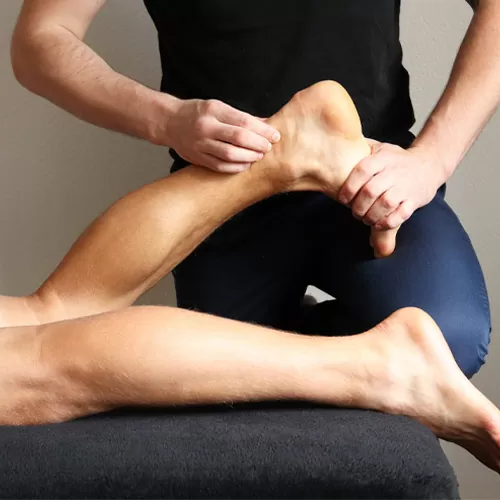
- Pain Management: To alleviate initial pain and inflammation, Mark was introduced to modalities like ice application and manual therapy techniques to reduce localized swelling.
- Range of Motion Exercises: Mark was prescribed a series of stretching exercises to improve ankle dorsiflexion and reduce calf muscle tightness. He performed these exercises daily.
- Strengthening Exercises: A progressive strength training program was initiated to address calf muscle weakness. Exercises included calf raises, eccentric heel drops and other single-leg strengthening exercises like step downs and STAR reaches.
- Biomechanical Analysis: Mark’s running gait was assessed to identify and address faulty biomechanics contributing to his condition. He received guidance on proper running form and footwear selection.
- Activity Modification: Mark temporarily reduced high-impact activities like running and hiking to allow his tendon to heal. But he was encouraged to remain active and do low-impact exercises such as pain-free walking and cycling were encouraged.
- Gradual Return to Activity: As Mark’s symptoms improved, he was guided through a gradual return to his desired activities. His physical therapist monitored his progress closely.
- Home Exercise Program: Mark was provided with a personalized home exercise program, including stretching and strengthening exercises. He was encouraged to maintain a routine for ongoing prevention.
Follow-Up and Outcome:
Over several weeks of diligent adherence to his treatment plan, Mark experienced significant improvements. His pain diminished, and he regained ankle flexibility and strength. Mark’s running form improved, and he could return to his favorite activities gradually.
Regular follow-up appointments at King Physical Therapy allowed for ongoing monitoring and adjustments to his treatment plan as needed. Mark learned to manage his condition effectively, recognizing the importance of continuing self-care and early intervention should any symptoms reoccur.
Conclusion:

Mark’s case illustrates the effectiveness of physical therapy at King Physical Therapy in managing and resolving Achilles tendonitis. Through a comprehensive evaluation and a tailored treatment plan addressing both the physical and biomechanical aspects of his condition, he was able to regain his active lifestyle and enjoy pain-free mobility once again.
His success is a testament to the importance of early intervention, education, and proactive self-care in overcoming tendonitis!
Join Us for a Healthier You – Book Today!
Achieve your health goals at King Physical Therapy—reserve your session today!

Our Patients Get Great Results
“Thorough and passionate about her profession and getting her patients back feeling like they did before their injury. For me, it was the shoulders and now my knee. My first PT experience with another practice was terrible. King Physical Therapy not only works you through the exercises, but they really explain all that is going on with the particular injury and healing. I love this non-surgical non-prescription approach.”
-Scott M.
Exercise of the Month
ISOMETRIC ANKLE EXERCISE
Slowly push against an immovable object in 4 directions of ankle movement, such as inward, outward, up, and down. Hold for 5 seconds.
3 Sets, 10 Reps. (Materials needed: immovable object)

Get Your Health Back on Track This National Physical Therapy Month
October is National Physical Therapy Month, and at King Physical Therapy, we’re celebrating by reminding our communities that physical therapy is one of the safest and most effective ways to overcome pain, restore movement, and improve overall health.
If you’ve been struggling with pain, recovering from surgery, or dealing with an injury that limits your daily activities, our highly skilled therapists are here to guide you back to doing what you love. Unlike quick fixes that only mask symptoms, physical therapy addresses the root of the problem and provides lasting solutions tailored to your needs.
Why choose physical therapy? Here are just a few of the benefits:
- Improved mobility and range of motion: Therapy helps joints, muscles, and connective tissues move more freely so you can return to work, sports, and everyday life.
- Restored strength: Whether from injury, surgery, or poor movement habits, we identify weaknesses and build them back up to support healthier movement.
- Better overall health: PT encourages healthier habits, improved posture, and increased activity, all of which reduce pain and enhance wellness.
- Lower risk of re-injury: By teaching you safer movement patterns, we help protect your body from future setbacks.
At King Physical Therapy, we believe care should be generous, clearly understood, and focused on helping you achieve real results. Our mission is to positively impact lives by combining compassion, encouragement, and expert treatment for every patient we see.
If pain or limitation is holding you back, there’s no better time to take the first step. Call today or request an appointment at www.kingphysicaltherapy.com. Let’s make this National Physical Therapy Month the start of your journey back to health.
October Word Scramble
dancy
nlhealeow
mkpupin
rwcrcesao
ealevs
dierc
Answer Key
candy
halloween
pumpkin
scarecrow
leaves
cider
Thank You for Subscribing!
Follow Us on Facebook

Stay connected with King Physical Therapy on Facebook! Follow us for expert tips on injury prevention, wellness inspiration, and updates on services—all designed to keep you moving and feeling your best.
Healthy Recipe: Roasted Brussels Sprouts with Pomegranate

- 1 1/4 pounds Brussels sprouts, trimmed and halved
- 2 tablespoons canola oil
- Kosher salt and freshly ground pepper
- 3 tablespoons pomegranate molasses
- Seeds from 1 pomegranate
- 1/2 cup coarsely chopped toasted hazelnuts
- Finely grated zest of 1 lime
- 1 tablespoon finely grated orange zest
Directions: Preheat the oven to 375 degrees F. Put the Brussels sprouts in a medium roasting pan; toss with the canola oil and season with salt and pepper. Roast in the oven until light golden brown and a knife inserted into the centers goes in without any resistance, about 45 minutes. Transfer the sprouts to a large bowl and add the pomegranate molasses, pomegranate seeds, hazelnuts, and lime and orange zests. Season with salt as needed.
Meet Our Team

Karla King
PT, MPT, Cert. MDT

Suzanne Gregory
PT, MPT

Monique Mangram
Office Staff